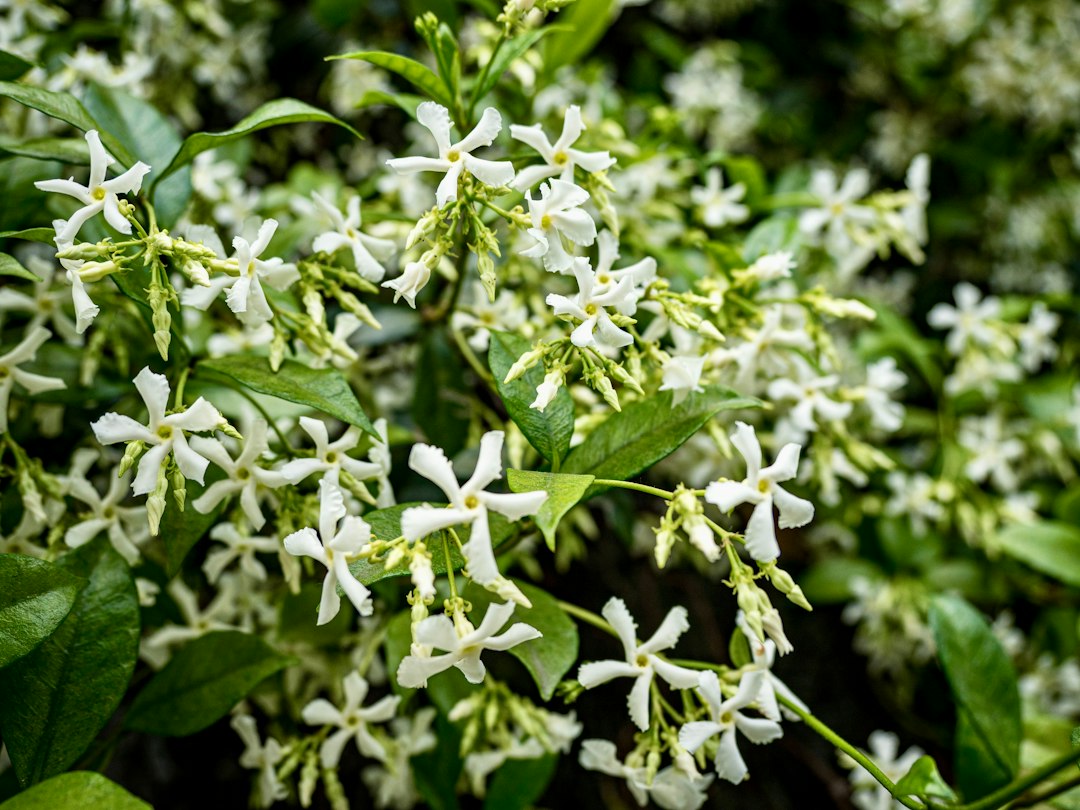
Jasmine is loved for its scent and its glossy leaves, but it is a plant that wants bright light and steady care. Give it sun, even moisture, and something to climb, and it rewards the effort. Treat it like a low-light foliage plant, and it sulks and stops flowering.
This guide covers jasmine (Jasminum) in the order that affects results most. If leaves are already yellowing, why jasmine leaves turn yellow goes deeper.
Light
Jasmine needs bright light, and many types do best with some direct sun each day. A south- or west-facing window is a good indoor spot. Too little light leads to long, weak stems and few flowers. See grow lights for houseplants if no bright window is available.
Watering
Keep the soil evenly moist but never soggy. Water when the top of the soil has begun to dry, and empty any water that collects in the saucer. Swinging between very wet and very dry is hard on the plant. The guide to overwatering and underwatering is useful when the signs are confusing.
Soil and potting
Use a well-draining potting mix with some added perlite or bark, and a pot with drainage holes. Jasmine grows quickly and can become pot-bound, so repot into a slightly larger container when roots fill the pot, usually in spring.
Humidity and temperature
Average household humidity is usually fine, though jasmine appreciates some extra moisture in the air in dry homes. Many types like cooler conditions in winter, which helps set flower buds, but avoid cold drafts and heating vents.
Fertilizing
Feed with a balanced houseplant fertilizer during the growing season, following the label. Fertilizer that is very high in nitrogen can push leafy growth at the expense of flowers. Pause feeding in winter.
Pruning, support, and propagation
Jasmine is a vine or sprawling shrub, so give it a trellis, hoop, or stakes. Trim after flowering to keep it tidy and encourage branching. It can be propagated from stem cuttings: take a healthy tip, strip the lower leaves, and set it in moist, airy mix in a bright spot.
The scent and the seasons: what makes this plant different
Jasmine is grown above all for its fragrant flowers, and blooming usually depends on a pattern many houseplants do not need: bright light through the growing season plus a cooler, slightly drier rest period in winter. Skipping that rest, or keeping the plant in a dim spot, is the most common reason a healthy-looking jasmine never flowers.
Common problems
Yellowing leaves, dropped buds, and a plant that will not bloom are the most common complaints. See why jasmine leaves turn yellow for a step-by-step check.
A few things people ask
Can jasmine live indoors?
Yes, with very bright light, and ideally some direct sun. Many people keep it outdoors in warm weather and bring it inside for winter.
Why is jasmine not blooming?
Too little light is the most common reason. Heavy nitrogen fertilizer and skipping the cooler winter rest can also reduce flowering.
Does jasmine need a trellis?
Most types climb or sprawl, so a support keeps growth tidy and helps light reach the leaves.
Is jasmine safe around pets?
The ASPCA lists jasmine as non-toxic to dogs, cats, and horses. See the ASPCA jasmine page. Some plants sold as jasmine are not true jasmine, so check the label.