
A fiddle leaf fig, a rubber plant, and a weeping fig can share the same room and still react to it very differently. The fiddle leaf is notorious for dropping leaves over the smallest change, even just rotating its pot, the rubber plant barely seems to notice anything short of neglect, and the weeping fig sits somewhere in between, mostly fine but occasionally shedding a handful of leaves after a move. They’re all in the same genus and share a lot of care basics, but the differences are real enough that it’s worth knowing which one you have.
Light
All three want bright, indirect light. Fiddle leaf fig is the most demanding of the group, it wants consistently bright light and tends to get leggy or drop leaves in anything dimmer. Rubber plant and weeping fig are more tolerant of moderate light, though both still do best with several hours of bright, indirect exposure a day. Direct hot sun through unfiltered glass can scorch leaves on any of the three.
Watering
Let the top inch or two of soil dry out between waterings, then water thoroughly. All three ficus types are more tolerant of slight underwatering than overwatering, soggy soil is the more common way people run into trouble across the whole genus.
If you’re seeing specific symptoms, the cause and the fix can differ quite a bit by species. Fiddle leaf figs commonly develop brown spots from a handful of different causes worth telling apart. Rubber plants are notably sensitive to cold drafts causing drooping even when watering is fine. Weeping figs are known for dropping leaves in response to any environmental change, moves, drafts, or light shifts, rather than watering specifically. The general overwatered versus underwatered breakdown is a good starting point if you’re not sure which direction a problem points.
Soil and potting
A well-draining standard potting mix works for all three. Make sure the pot has drainage holes, this matters more than the exact soil blend for avoiding overwatering issues. Ficus in general dislikes being disturbed, so avoid repotting more often than necessary, roughly every one to two years as the plant outgrows its container is plenty.
Humidity and temperature
Average household humidity is fine for all three, though higher humidity supports lusher growth. Normal indoor temperatures, roughly 65 to 85°F, work well. Avoid cold drafts, especially for rubber plants, which react to sudden temperature drops with drooping even when everything else about their care is fine.
Fertilizing
A balanced liquid fertilizer, diluted to about half strength, monthly during spring and summer supports steady growth across all three types. Hold off in fall and winter when growth naturally slows.
Propagation
Stem cuttings with at least one node root reasonably well in water or moist soil for all three, though ficus in general propagates a bit slower and less reliably than something like pothos. Patience helps, roots can take several weeks to a couple months to develop.
Telling the three apart
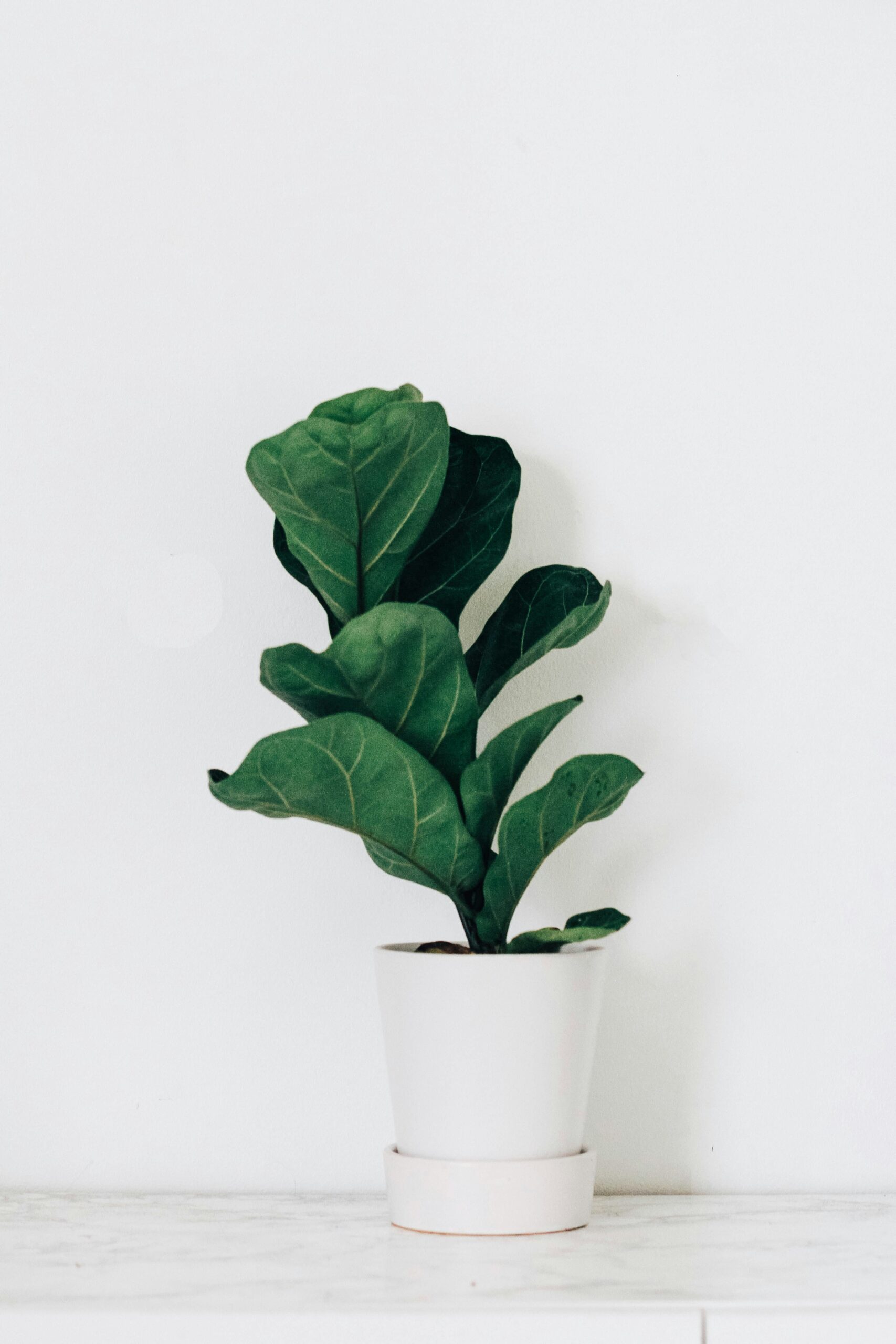
Fiddle leaf fig (Ficus lyrata) has large, violin-shaped, heavily veined leaves and a reputation, largely earned, for being fussy about consistency. It wants stable light, watering, and placement, and reacts visibly to changes in any of those.
Rubber plant (Ficus elastica) has thick, glossy, oval leaves and is noticeably more forgiving of inconsistent care, with the notable exception of cold drafts, which it’s surprisingly sensitive to despite its tough reputation otherwise.
Weeping fig (Ficus benjamina) has small, glossy, pointed leaves on a plant that often grows into a tree-like shape. It’s famous among houseplant growers for dropping leaves in response to almost any environmental change, even when the change itself isn’t harmful.
| Species | Leaves | Notable trait |
|---|---|---|
| Fiddle leaf fig (Ficus lyrata) | Large, violin-shaped, heavily veined | Reactive to change; trickiest of the three to keep looking its best |
| Rubber plant (Ficus elastica) | Thick, glossy, oval | Forgiving overall, but sensitive to cold drafts |
| Weeping fig (Ficus benjamina) | Small, glossy, pointed | Tree-like growth habit; sheds leaves after big changes but recovers |
A few things people ask
Is ficus toxic to pets? Yes, ficus sap contains compounds that can irritate skin and cause mild digestive upset if ingested by cats or dogs. It’s not typically severe, but worth keeping out of reach.
Why does my ficus drop leaves after I move it? All three types can shed some leaves after a significant change in location, light, or temperature, this is a normal stress response rather than a sign of lasting damage, and new growth typically resumes once the plant adjusts to its new spot.
Should I wipe the leaves? Dust buildup on the broad, glossy leaves of fiddle leaf fig and rubber plant in particular can reduce how much light they take in. Wiping with a damp cloth every few weeks keeps them cleaner and, some growers report, seems to support slightly better growth.
Which of the three is easiest for a beginner? Rubber plant is generally considered the most forgiving of the three, tolerant of somewhat inconsistent watering and light as long as it’s kept away from cold drafts. Fiddle leaf fig is usually the trickiest to keep looking its best. Next reads: Bird of Paradise Care Guide: Light, Water, and Growing It Indoors, Monstera Care Guide: Light, Water, and Fenestration and Croton Care Guide: Light, Water, and Common Varieties.