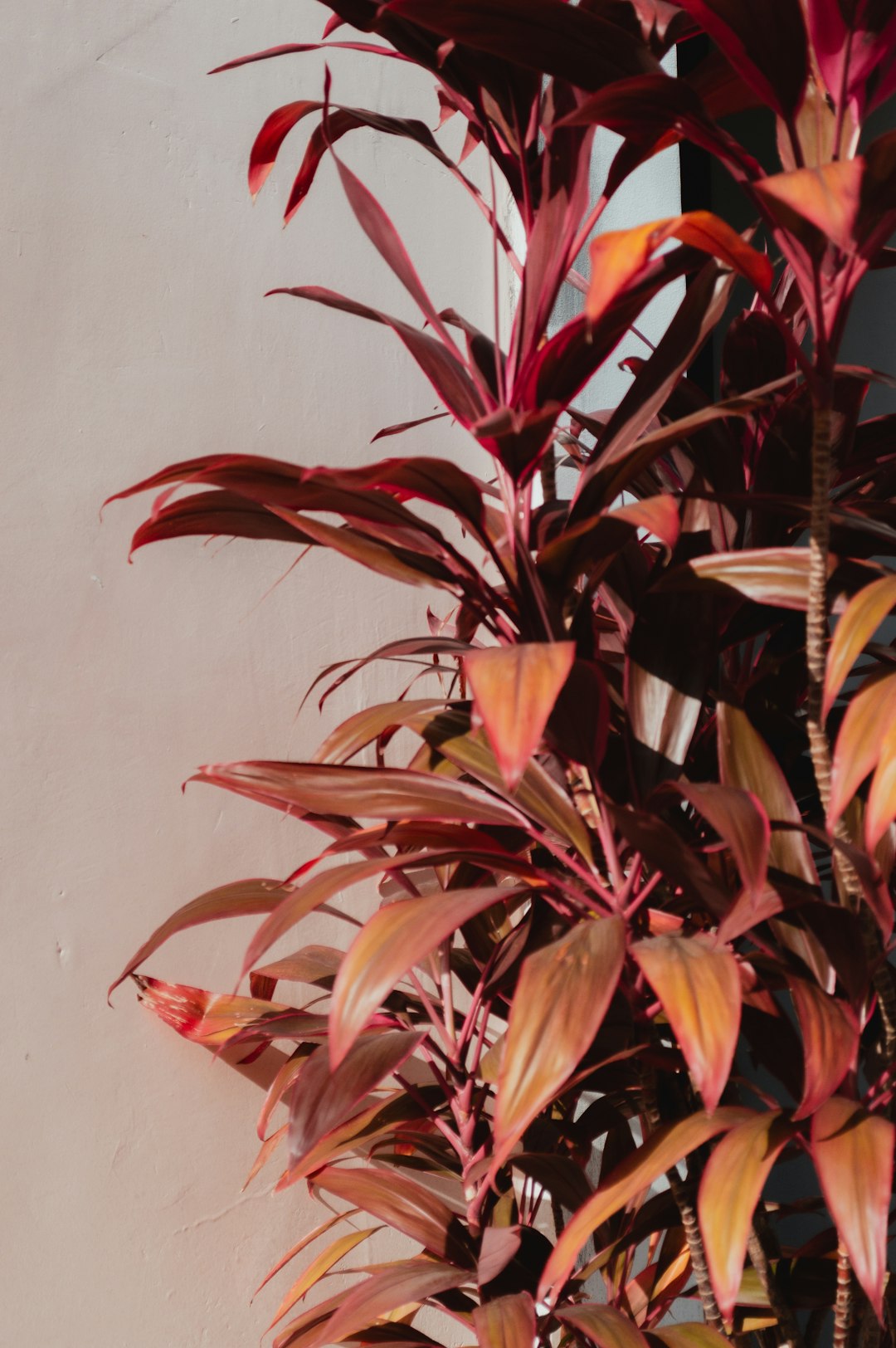
A ti plant can start life as a piece of bare stick about the length of a hand. “Ti logs” — cane sections sold at some garden centers and gift shops — can be laid on their side in a tray of damp mix, and with a little patience two tiny red shoots poke out of the bark. Given the brightest corner of the living room, a stick like that can grow into a tall plant with deep burgundy leaves, and it has to stay in that bright corner or it turns a muddy green.
The ti plant is Cordyline fruticosa (older labels say Cordyline terminalis), also sold as Hawaiian ti or good luck plant. It grows wild from Southeast Asia across the Pacific islands, and indoors it is a cane plant with broad, glossy leaves in red, pink, purple, cream, or green, depending on the variety. It is not a hard plant to keep, but it is fussy about two things that most guides gloss over: the water you give it and the light it gets.
| Care area | What it needs |
|---|---|
| Light | Bright indirect light, with a little gentle direct sun for the best color |
| Water | When the top inch or two is dry; use rain, distilled, or RO water if your tap water has fluoride |
| Soil | Rich, well-draining peat or coir-based potting mix |
| Humidity | 50 percent or higher is ideal |
| Temperature | 65 to 85°F; keep above 50°F |
| Fertilizer | Half-strength balanced feed monthly in spring and summer |
| Pets | Toxic to cats and dogs if chewed (saponins) |
Light
A ti plant needs more light than its tropical look suggests. An east window, or a spot a few feet back from a south or west window, is about right. A couple of hours of soft morning sun is welcome. Harsh afternoon sun through glass, especially in summer, can bleach and scorch the leaves, so filter it with a sheer curtain if the plant sits close to a hot window.
In low light the plant survives but sulks. Growth slows, the new leaves come in smaller and further apart on the cane, and the colorful varieties lose most of their color. The reason is explained below, because it is the most common question about this plant. If you do not have a bright window, a grow light set close above the plant for around twelve hours a day works well; our roundup of the best grow lights for houseplants has some options that do not look like lab equipment.
Watering
Ti plants like evenly moist soil but not wet soil. Water when the top inch or two feels dry, give it enough that water runs out of the drainage hole, and empty the saucer after fifteen minutes. In a warm, bright room that might be once a week in summer; in winter it may stretch to every two weeks or longer. Check with your finger rather than going by the calendar.
The water itself matters more for this plant than for most. Ti plants are very sensitive to fluoride, and many city water supplies have it added. Over time it builds up in the leaf tips and causes brown tips with a yellow edge. If your tap water is fluoridated or softened, use rainwater, distilled water, or water from a reverse osmosis filter, and flush the pot thoroughly with clean water every month or so to wash out salts. If you are already seeing browning, our article on why ti plant leaves turn brown walks through the different causes.
Soil and potting
A standard peat or coir-based indoor potting mix works fine, with a couple of handfuls of orchid bark mixed in to keep it airy. Some growers avoid perlite for fluoride-sensitive plants because certain kinds can release small amounts of fluoride; pumice or bark drains just as well and avoids the issue. Always use a pot with a drainage hole.
Repot in spring every two years or so, or when roots are circling the bottom of the pot. Go up only one pot size at a time. A ti plant in a pot that is much too big sits in a large mass of wet soil, and that is how root rot starts.
Humidity and temperature
Ti plants are happiest at 50 percent humidity or higher. Ordinary room air in summer is usually fine, but winter heating can make the air dry enough to crisp the leaf tips. A humidifier nearby is the most reliable fix, and a bathroom or kitchen with a bright window is a good home for a smaller plant.
Keep it between about 65 and 85°F. Anything below 50°F can damage the leaves, and cold drafts from doors or single-pane windows in winter cause dark patches that turn brown. Many people put ti plants outside for the summer, which they love, but bring them in well before nighttime temperatures start dropping into the 50s.
Fertilizing
Feed once a month in spring and summer with a balanced liquid fertilizer at half strength. Skip it in autumn and winter, when the plant is growing slowly. Heavy feeding builds up salts in the soil and causes the same tip burn as fluoride, so less is better here. Avoid fertilizers made with superphosphate, which can contain fluoride.
Propagation
Ti plants are some of the easiest houseplants to propagate, and you do not need leaves to do it. There are three ways:
- Tip cuttings. Cut off the leafy top with four to six inches of cane, strip the lowest few leaves, and root it in water or moist mix. Roots usually show up in two to four weeks.
- Cane sections (ti logs). Cut a bare stretch of cane into pieces two to three inches long. Lay them on their side, half buried in damp mix, or stand them upright with the end that was closer to the roots facing down. The dormant buds along the cane sprout into new shoots in a few weeks. This is exactly what the souvenir ti logs sold in Hawaii are.
- Air layering. For a tall plant you want to shorten, wrap a nicked section of cane in damp sphagnum moss and plastic, wait for roots, then cut below them.
The leftover stump of a plant you have cut back will usually push out one or more new shoots just below the cut, so you rarely lose anything by propagating.
Why the red fades, and how to get it back
The most common question about ti plants is some version of “Mine was bright red when I bought it and now it is green. What did I do wrong?” Usually nothing is wrong with the plant’s health. It is reacting to light.
Under the red and pink in a colorful ti leaf there is ordinary green chlorophyll. The red comes from pigments called anthocyanins, which the plant makes in larger amounts when it gets strong light. Nursery plants are grown in bright greenhouses or outdoors in Florida and Hawaii, so they arrive fully colored. Put one in a medium-light living room and it stops making as much pigment, and it makes more chlorophyll to catch what light there is. The new leaves come in greener, and over months the whole plant can look like a different variety.
A few things to know about the color shifts:
- Watch the new leaves, not the old ones. A leaf that has already matured in low light will not fully recolor. If you move the plant somewhere brighter, it is the next few leaves from the top of the cane that show you whether it worked.
- Brighter, not hotter. The jump from a dim corner to an east window, or a grow light, is usually enough. Moving straight into hard afternoon sun bleaches the leaves instead of coloring them. Increase light over a couple of weeks.
- Easy on the nitrogen. A plant pushed with a lot of high-nitrogen fertilizer tends to grow greener, softer leaves. Half-strength balanced feed keeps the color better.
- Cooler nights help a little. Like autumn leaves, many ti varieties color up a bit more when nights are a few degrees cooler than days, as long as they stay well above 50°F.
- Some varieties are just greener. A plain green ti or a variety with only pink edges will never turn solid red, no matter how much light it gets. If you have lost the tag, look at the youngest leaf in bright light; that is the truest picture of what your variety wants to look like.
Common problems
Brown leaf tips are the most common complaint, and they usually come down to fluoride or salts in the water, dry air, or overwatering. Our article on why ti plant leaves turn brown explains how to tell them apart from the pattern of the damage. Yellow lower leaves with soggy soil point to root trouble; see root rot in houseplants. Fine pale speckling with faint webbing under the leaves means spider mites, which a regular rinse in the shower usually keeps under control. Losing a leaf or two at the bottom of the cane now and then is normal.
A few things people ask
Is a ti plant toxic to cats and dogs?
Yes. The ASPCA lists the ti plant as toxic to both cats and dogs because of the saponins it contains. Chewing on it usually causes vomiting and drooling, so keep it away from pets that like to nibble.
How fast does a ti plant grow indoors?
In good light it is a moderate grower and can add six inches to a foot of height in a year. In low light it may barely change. Most indoor plants top out around three to six feet unless you cut them back.
Is a ti plant the same as a dracaena?
No, but they are close relatives, look similar, and need much of the same care, including protection from fluoride. Ti plants usually have broader leaves on a short leaf stalk and more color. If yours turns out to be a dracaena, our dracaena care guide will cover it.
My ti plant is tall and bare at the bottom. Can I fix that?
Yes. Cut the cane back to the height you want in spring. The top can be rooted as a cutting, and the stump will sprout new leafy shoots below the cut, which gives you a fuller plant within a season. Next reads: Yucca Care Guide: Light, Water, and Cutting Back the Cane, Areca Palm Care Guide: Light, Water, and Feeding a Hungry Palm and Dieffenbachia Care Guide: Light, Water, and Propagating from Cane Cuttings.