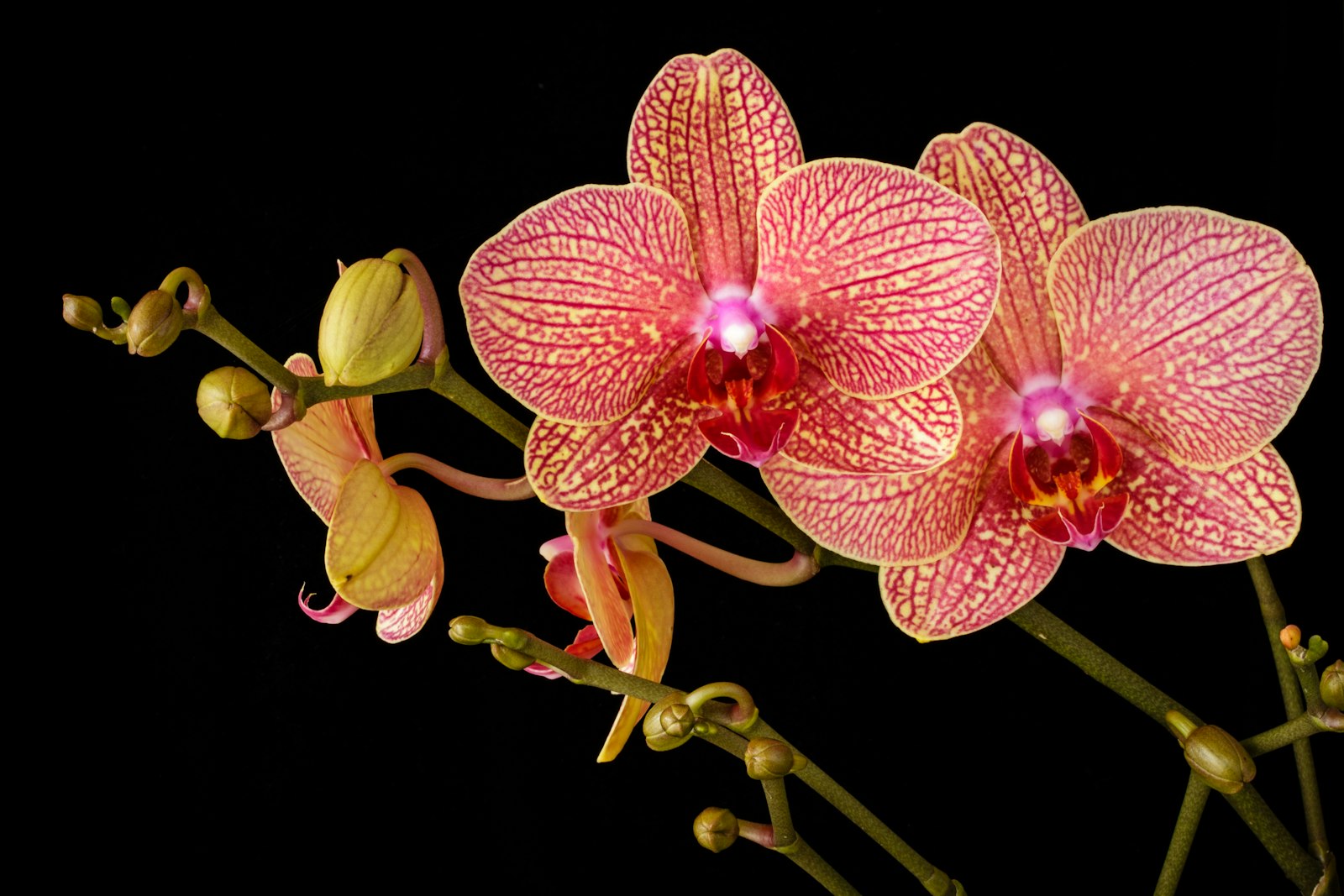
A Phalaenopsis watered on schedule, every week like clockwork, can still go soft and slightly pleated, like the leaves have lost some internal pressure. Increasing how much it’s watered, on the assumption that it just isn’t getting enough, makes the leaves worse instead of better. The problem often isn’t the watering schedule at all: slide the plant out of its pot and half the roots may have gone soft and hollow, unable to take up any of the water they’re being given.
Orchid leaves get their firmness from water pressure inside the leaf cells, and that water comes entirely through the roots, so wrinkled or pleated leaves are really a root problem showing up in the leaves, not necessarily a sign you’re not watering enough. The tricky part is that root problems can come from either direction, too much water or too little functioning root tissue, and both end up looking similar in the leaves.
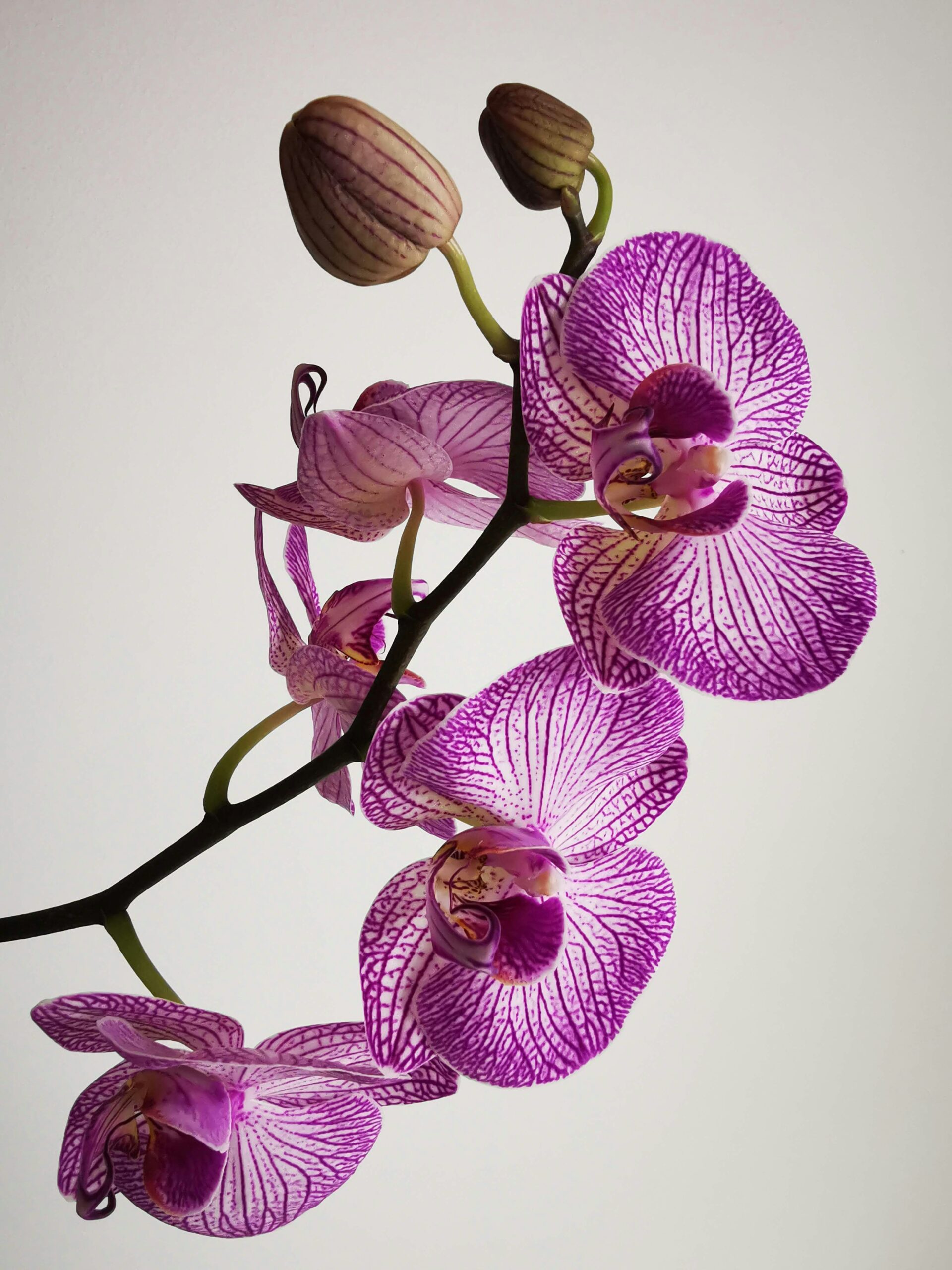
Quick triage: roots look plump, green or silvery when dry, firm to the touch, but leaves are still wrinkled? Possibly underwatering or low humidity rather than a root problem, keep reading. Roots feel mushy, hollow, or blackened, especially near the base? Root rot from overwatering, the most common actual cause. Roots look shriveled, papery, and gray throughout rather than mushy? Roots have dried out and died back, often from a long stretch of underwatering or old age. One lower leaf wrinkling and yellowing while the rest of the plant looks fine? Probably just that leaf’s natural lifecycle ending.
| Cause | Symptom | What to do |
|---|---|---|
| Underwatering or low humidity | Roots plump and firm, but leaves still wrinkled | Water thoroughly; consider raising humidity |
| Root rot (overwatering) | Roots mushy, hollow, or blackened, especially near the base | Trim affected roots, repot into fresh bark, water less often |
| Root dieback | Roots shriveled, papery, and gray throughout | Trim dead roots, repot into fresh bark, resume regular watering |
| Normal aging | One lower leaf wrinkling and yellowing; rest of plant fine | Nothing needed; let the leaf finish its cycle or trim it |
Root rot from overwatering (the most common actual cause)
Healthy Phalaenopsis roots are plump and typically green when wet, silvery-green when dry, and firm enough to hold their shape. Consistently soggy potting medium, most orchids are grown in bark rather than soil specifically because bark drains and dries faster, suffocates the roots and invites rot, similar to the mechanism covered in the root rot piece for other houseplants, just happening in orchid bark instead of soil.
Once enough roots have rotted, the plant physically can’t pull up water anymore no matter how much you give it, and the leaves wrinkle and soften as a direct result, ironically making overwatering look identical to underwatering in the leaves themselves. The giveaway is in the roots: gently slide the plant out of its pot, and rotted roots will feel mushy or hollow, sometimes with the outer layer sliding off entirely when touched, leaving a thin wiry core behind.
If you find rot, trim away the affected roots with a clean, sharp tool back to firm tissue, and repot into fresh bark with a pot that drains well. Water less frequently going forward, letting the roots dry out between waterings rather than keeping the medium consistently damp.
Root dieback from prolonged dryness or old age
Less immediately obvious than rot, but roots can also lose their ability to absorb water by drying out and dying back, either from a long stretch of underwatering or simply from natural aging, since orchid roots don’t live forever and older ones gradually stop functioning even with good care. This produces the same wrinkled-leaf symptom as rot, just through the opposite root condition.
The distinguishing factor is texture: dried-out dead roots look gray or brown and feel papery or brittle rather than mushy, crumbling rather than sliding apart when squeezed. If a good number of roots are in this condition, the plant simply doesn’t have enough functioning root tissue to keep the leaves hydrated regardless of how consistently you water.
Trim away the clearly dead roots, repot into fresh bark, and resume regular watering. New roots typically emerge from the base over the following months as the plant recovers, though leaf firmness may take a while to fully return even after root health improves.
Low humidity
Even with a functioning root system, persistently low humidity can cause leaves to lose water through their surface faster than the roots replace it, leading to mild wrinkling that’s less severe than the root-related causes above and tends to improve once humidity conditions improve rather than requiring repotting.
This is worth considering mainly when the roots check out completely healthy and the wrinkling is relatively mild. A humidity tray, grouping plants together, or a small humidifier nearby can help, particularly in dry winter air.
Natural aging of a lower leaf
Orchids shed their oldest leaves periodically as part of normal growth, and that leaf often wrinkles, yellows, and softens before eventually dropping or being ready to trim off, while the rest of the plant, roots included, stays completely healthy. This is easy to mistake for a problem when it’s really just one leaf reaching the end of its natural life.
If it’s isolated to the single oldest, lowest leaf and every other leaf plus the root system looks fine, there’s nothing to fix here beyond letting that leaf finish its cycle or trimming it once it’s mostly spent.
A few things people ask
Can wrinkled orchid leaves go back to normal? Leaves that have already wrinkled significantly usually don’t fully plump back up, but they can stop getting worse and the plant can put out healthy new leaves once the underlying root issue is corrected. New growth is the better sign to watch for.
How often should I actually be watering my orchid? Most Phalaenopsis do well with watering roughly once a week, letting the roots dry out close to fully between waterings, though this varies with pot type, bark freshness, and home humidity. Checking root color and pot weight is more reliable than a fixed schedule.
Is it normal for orchid roots to grow outside the pot? Yes, completely normal, and those aerial roots absorb humidity from the air even outside the growing medium. Don’t trim them off or try to force them back into the pot.
My orchid has no leaves left but the roots look okay. Is it dead? Not necessarily. Healthy roots and a green growing point can sometimes support the plant putting out new leaves even after losing all existing ones, though it’s a slower recovery. Keep up normal root-based care and watch for new growth before giving up on it.
For the full rundown on keeping orchid happy long-term, light, watering, soil, and reblooming, see the Orchid Care Guide. Next reads: Why Are My Anthurium’s Leaves Turning Yellow?, Why Is My Oxalis Drooping? and Why Are My Begonia’s Leaves Turning Yellow?.