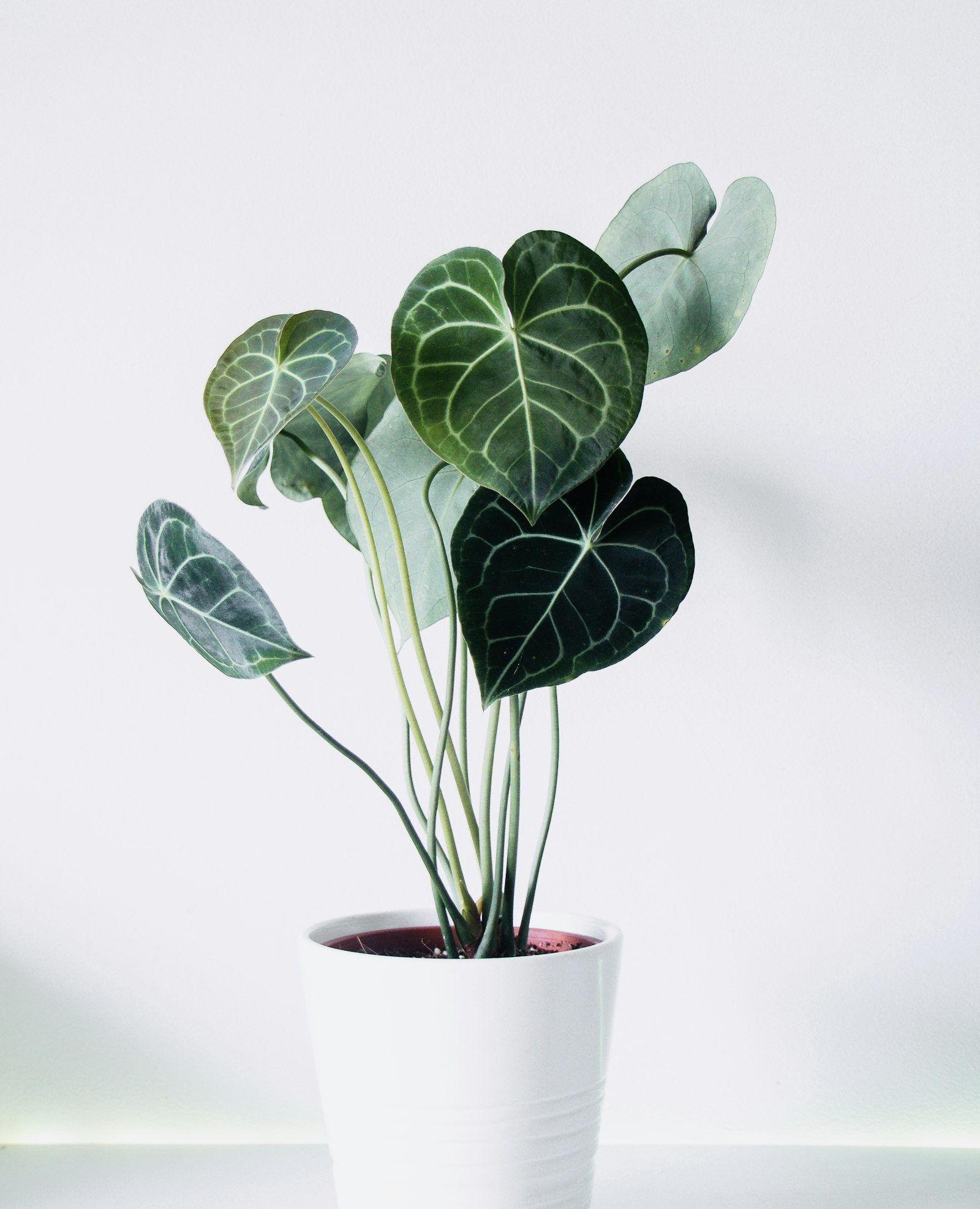
The first sight of thick, cord-like roots pushing out of an anthurium’s stem above the soil line can look like something has gone badly wrong. Those are aerial roots, and they’re a completely normal part of how this plant grows in the wild, climbing trees and pulling in moisture from humid air. Once you know that, they’re less a worry and more a useful clue about what the plant is telling you about its environment.
Light
Anthurium does best in bright, indirect light, which also supports the most consistent flowering. Direct sun can scorch the glossy leaves, while too little light means fewer of the waxy, heart-shaped blooms this plant is known for. A spot near an east-facing window, or a few feet back from a brighter south or west window, usually works well.
Watering
Let the top inch or two of soil dry out between waterings, then water thoroughly. Anthurium likes consistent moisture but is genuinely sensitive to overwatering, soggy, poorly-draining soil is the most common way people run into trouble with this plant. If you’re seeing yellowing leaves in a pattern where the veins stay green but the tissue between them turns yellow, working through the specific cause is worth doing separately, since that particular pattern usually points toward a nutrient issue rather than watering. If the base feels soft or mushy, root rot is worth checking for directly.
Soil and potting
A chunky, fast-draining mix, similar to what an orchid or philodendron would use, orchid bark, perlite, and regular potting soil blended together, works well and reflects anthurium’s epiphytic roots in the wild. Make sure the pot has drainage holes. Repot every one to two years, or when roots are visibly circling and crowding the pot, moving up only one pot size at a time.
Humidity and temperature
Anthurium appreciates above-average humidity given its tropical, epiphytic origins, and can develop crispy leaf edges in persistently dry air. A humidifier, pebble tray, or grouping with other plants helps in dry climates or during winter heating season. Normal indoor temperatures work well, and it doesn’t tolerate cold drafts.
Fertilizing
A balanced liquid fertilizer, diluted to about half strength, every few weeks during spring and summer supports both foliage growth and blooming. Anthurium is a moderate feeder, and consistent light feeding during the growing season noticeably improves flower production compared to an unfed plant.
Propagation
The most reliable method is division, when repotting a mature plant, separate sections that already have their own roots and at least a few leaves attached, then pot them individually. Stem cuttings that include a node and an aerial root can also be rooted in water or moist soil, though this works best when the cutting already has some root development to start from.
Aerial roots
Thick roots emerging from the stem above the soil line are a normal feature of anthurium, not a sign of a problem, and they shouldn’t be cut off. NC State Extension confirms that in its native habitat, anthurium grows as an epiphyte, and in the wild these roots absorb moisture and nutrients directly from humid air and organic debris on tree bark. Indoors, you can leave them as they are, gently guide them into the soil, or mist them occasionally, all three approaches are fine, and the plant doesn’t need this addressed for its health.
Common varieties
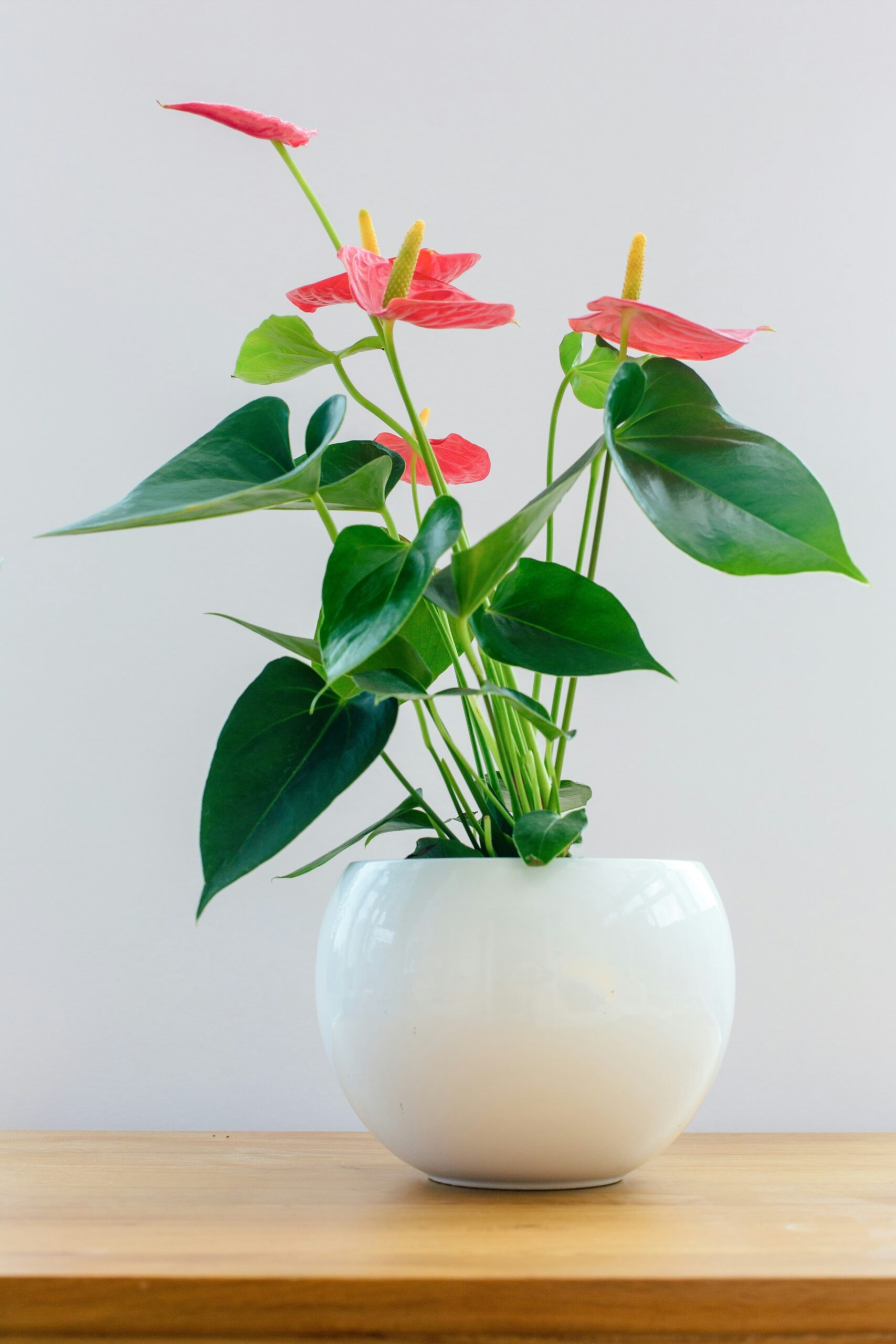
Anthurium andraeanum is the most common variety sold as a flowering houseplant, with glossy heart-shaped leaves and red, pink, or white waxy spathes. Anthurium clarinervium and Anthurium crystallinum are grown primarily for their striking, deeply veined velvety foliage rather than flowers, and tend to want slightly higher humidity than the flowering types.
Variety Grown for Notes Anthurium andraeanum Waxy red, pink, or white spathes The most common flowering type Anthurium clarinervium / crystallinum Deeply veined, velvety foliage Grown for leaves, not flowers; wants higher humidity
Common problems
Yellowing leaves with green veins and yellow tissue between them are the most distinctive complaint with this plant, and a nutrient deficiency is a more likely explanation than watering when that specific pattern shows up. If the plant is wilting alongside soft, mushy growth near the soil line, check for root rot instead.
A few things people ask
Is anthurium toxic to pets? Yes, the ASPCA lists anthurium (flamingo flower) as toxic to cats and dogs due to insoluble calcium oxalates, typically causing oral irritation and digestive upset, it’s worth keeping out of reach of curious pets.
How long do the flowers actually last? Each waxy spathe can stay attractive for several weeks to a couple of months, considerably longer than most flowering houseplants, and a healthy, well-fed plant often has blooms in some stage of development nearly year-round.
Should I trim the aerial roots? No, they’re a normal part of healthy growth and don’t need to be removed. If they bother you visually, guiding them gently into the soil is a better option than cutting them off.
Why hasn’t my anthurium flowered yet? Insufficient light is the most common reason, this plant needs consistently bright, indirect light to bloom reliably. A plant kept in a dim corner may stay healthy and green without ever producing the characteristic spathes. Next reads: Hoya Care Guide: Light, Water, and Blooming, Peace Lily Care Guide: Light, Water, and Blooming and Orchid Care Guide: Light, Water, and Reblooming.