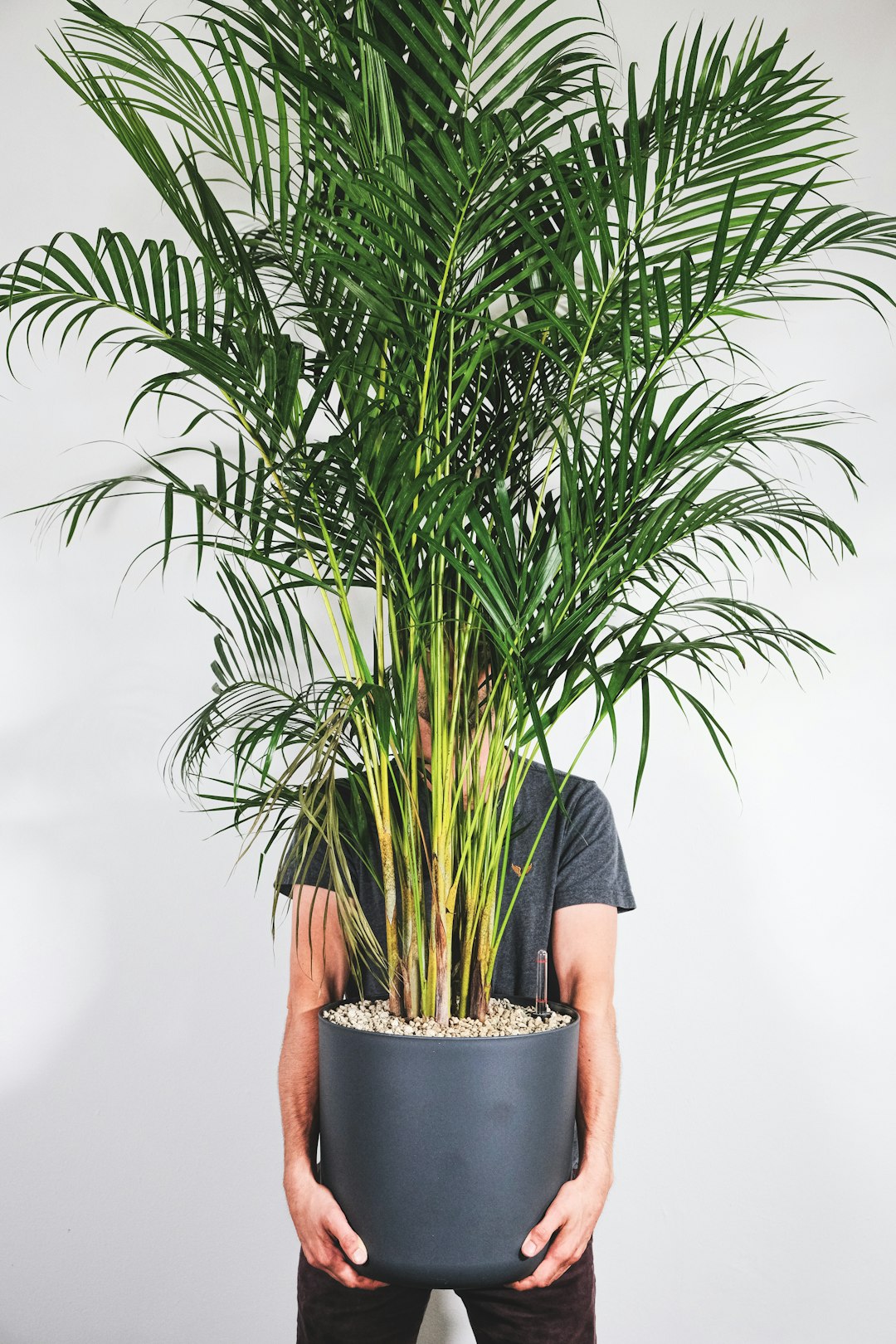
A big-box areca palm that comes home in a plastic sleeve can have two lower fronds the color of weak lemonade within three weeks. What most people do next is assume it is thirsty, give it a long drink every few days, and move it right up against a south window so it will “perk up.” By midsummer there is more yellow than green, the leaflet tips are crisping, and one whole cane has flopped over at the soil line — three separate causes at once.
Areca palms (Dypsis lutescens, sometimes still sold as Chrysalidocarpus) yellow for more reasons than most houseplants, and a couple of those reasons are specific to palms. The good news is that each one leaves a slightly different pattern. If you read the pattern before you reach for the watering can, you can usually stop the damage on the next frond.
Quick triage
Start with these questions, in this order:
- Is it only the oldest, lowest frond, one at a time? Probably normal aging. See the first section.
- Is the soil still damp an inch or two down, and are several fronds yellowing at once, starting from the base? Overwatering, possibly with root trouble.
- Are the oldest fronds showing yellow-orange speckles, or a yellow band around the edges with the middle of each leaflet still green? That is a nutrient pattern, usually potassium or magnesium.
- Is the whole plant a washed-out yellow-green, worst on the side facing the window? Too much direct sun.
- Do the leaflets look dull and finely speckled, with faint webbing where the leaflets meet the stem? Check for spider mites.
| What you see | Likely cause | First move |
|---|---|---|
| One old frond at a time, new growth fine | Normal aging | Leave it until fully brown, then cut |
| Several fronds at once, soil stays wet | Overwatering / root rot | Let it dry, check roots |
| Orange speckles or yellow edges on old fronds | Potassium or magnesium shortage | Switch to a palm fertilizer |
| Pale, bleached look on the sunny side | Too much direct sun | Move back from the glass |
| Dull, stippled leaflets, fine webbing | Spider mites | Rinse and treat |
Normal aging (the one you can ignore)
An areca palm is a clump of many canes, and each cane is constantly pushing a new frond out of the top while the oldest one at the bottom winds down. A healthy plant will yellow and drop a lower frond every so often. The giveaway is that it happens slowly, one frond at a time, and the new spear coming up from the center looks perfectly green.
The temptation is to cut the yellow frond off right away because it looks untidy. It is better to wait. Palms pull nutrients back out of a dying frond before letting it go, and potassium in particular gets moved from old leaves to new ones. If you cut a half-green frond, you take that store away from the plant. Once it is mostly brown and papery, snip it close to the cane with clean scissors.
Overwatering and root problems
This is the most common cause. Areca palms like steady moisture, which people hear as “keep it wet.” It is not the same thing. When the potting mix stays soggy, the fine roots run short of air and start to die back, and the plant responds by yellowing several fronds at once, usually from the bottom up. In a bad case the base of a cane turns soft and brown and the whole cane leans or collapses.
Push a finger into the soil. If it is still damp two inches down several days after watering, hold off. If the pot is heavy, smells sour, or a cane wobbles at the base, slide the root ball out and look. Healthy palm roots are firm and tan to orange. Mushy, dark roots that pull apart need to come off. Our guide to root rot in houseplants walks through the cleanup, and if you are not sure which side of the line you are on, this overwatered-or-underwatered check helps.
Going forward, water when the top inch or two has dried, water until it runs out the bottom, and empty the saucer. A pot with real drainage holes matters more than any watering schedule.
Potassium and magnesium shortages
This is where palms are different from most houseplants. Palms are heavy users of potassium and magnesium, and a general houseplant fertilizer often does not give them enough. Because the plant moves these nutrients from old leaves to new ones, the symptoms show up on the oldest fronds first.
- Potassium shortage tends to show as small translucent yellow or orange spots on the oldest fronds, with the leaflet tips going brown and frizzled. Over time the old fronds look bronzed and scruffy.
- Magnesium shortage looks like a broad yellow band along the outer edges of the older leaflets while the center of each leaflet stays green. It is a fairly tidy, banded look rather than random spotting.
The fix is not more of your regular plant food. Switch to a fertilizer labeled for palms, which carries extra potassium and magnesium along with micronutrients, and feed through spring and summer at the label rate. The yellow fronds will not turn green again, but the next fronds should come in clean. Be patient. A palm puts out new fronds slowly, so you are judging the fix over a few months, not a few weeks.
Too much direct sun
Areca palms are often called sun-lovers because they grow outdoors in Florida, but a palm raised in a greenhouse and then parked against a hot south or west window will bleach. The fronds turn a pale, washed-out yellow-green, worst on the side facing the glass, and the leaflet tips may scorch brown.
Bright, indirect light is what you want: near a bright window but out of the hot afternoon beam, or behind a sheer curtain. Sun-bleached fronds will not recover their color, but new growth should come in a deeper green within a season.
Spider mites
Dry indoor air in winter is spider mite weather, and palms are a favorite. The leaflets take on a dull, finely speckled look, as if someone dusted them with sand, and eventually turn yellow. Look on the undersides and where the leaflets join the stem for very fine webbing and tiny moving specks.
Take the plant to the shower and rinse every frond, top and bottom, then follow up with insecticidal soap on a schedule, since one round never gets them all. Raising humidity helps keep them from coming back. A room humidifier is the easiest way to do that; a few options are covered in this humidifier guide.
A few things people ask
Should I cut off the yellow fronds?
Wait until they are mostly brown. The plant is still pulling nutrients out of a yellowing frond. Once it is dry and papery, cut it close to the cane. Never cut the green spear in the center of a cane, since that is where all its new growth comes from.
My palm has yellow fronds and brown tips. Is that the same problem?
Not always. Brown tips on otherwise green fronds usually point to dry air, uneven watering, or salt buildup from tap water and fertilizer. Our parlor palm brown tips guide covers that pattern, and most of it applies to arecas too. Yellowing that starts on the old fronds and spreads is more often water or nutrition.
Why are the stems yellow? Is that a problem?
No. The canes of an areca palm are naturally golden yellow, which is where the name “golden cane palm” comes from. Yellow stems with green fronds are a healthy plant. It is the fronds you watch.
Will a yellow frond turn green again?
No. Once a frond has lost its color it stays that way. What you are fixing is the next frond. Correct the cause, give it a couple of months, and judge the new growth, not the old.
For the full routine, including light, watering, and how to feed it properly, see our areca palm care guide. Next reads: Why Are My Yucca Leaves Turning Yellow?, Parlor Palm Care Guide: Light, Water, and Growth Habits and Why Are My Ti Plant Leaves Turning Brown?.