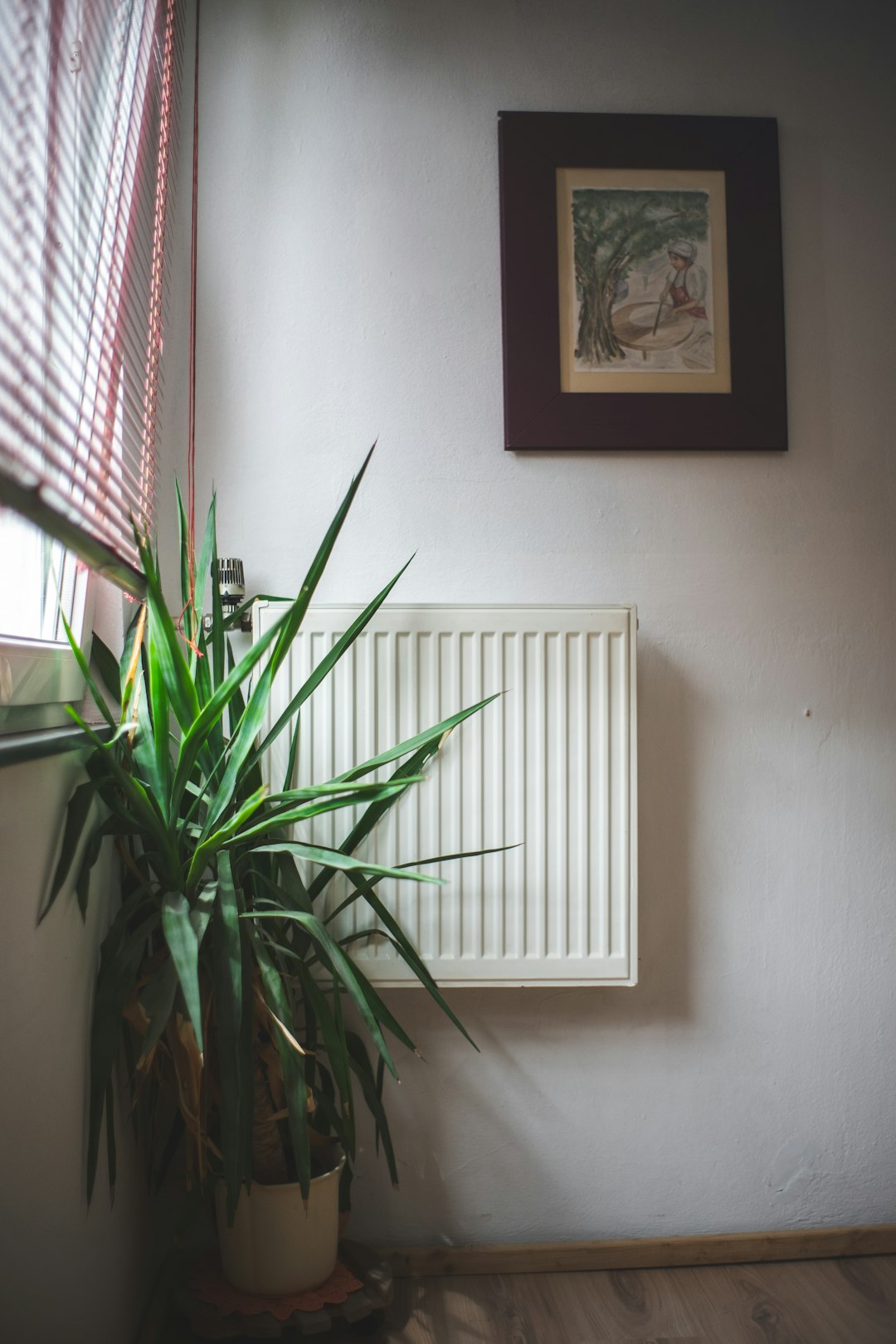
Houseplant leaves go crispy near a heater or radiator mainly because the air around them is very dry and the plant loses water faster than its roots can replace it. Brown, papery tips and edges are the usual result. Moving the plant out of the direct stream of heat, then raising humidity and checking the watering routine, fixes the cause in most homes.
If a plant that looked fine in October now has dry brown tips, a rustling texture and a bit of curl on the side facing the heat source, the instinct is often to water more. That can backfire. Crisp leaves near a heater do not always mean thirsty soil, and the first job is to tell dry air apart from a watering problem.
Quick triage
- Is the damage on the side facing the heat? Damage that follows the heat source points to dry or hot air. Damage spread evenly around the plant points elsewhere.
- Are the tips and edges brown while the middle of the leaf is green? Iowa State Extension calls low humidity the most common reason for brown leaf tips, and notes that home humidity is often low, especially during winter.
- Is the soil wet a couple of inches down? Wet soil with crisp leaves suggests a root problem rather than dry air. See the root rot guide.
- Does the plant sit in a draft from a vent? Both Iowa State and NC State Extension advise keeping plants away from heat vents.
1. Dry air from the heat source
Heating warms the air without adding moisture, so indoor air gets drier through winter. Iowa State Extension states that humidity levels in homes are often low, especially during winter, and that low humidity is the most common reason for brown leaf tips. A radiator or heater placed right beside a plant makes the effect stronger on the nearest leaves.
What helps: move the plant to a spot where warm air is not blowing across it or rising directly onto it. Then raise humidity around it. Iowa State suggests a humidifier, pebble tray, terrarium or grouping plants together. The humidifier guide compares options by room size.
2. Direct airflow from a vent
A plant sitting in the path of moving warm air can dry out faster than one in still air. NC State Extension advises keeping plants away from cold drafts, heating vents and fireplaces, because houseplants prefer stable temperatures. Iowa State likewise recommends avoiding drafts from doors, heat vents or windows.
What helps: shift the pot a short distance sideways so the airflow passes beside it, not over it. A few feet is often enough.
3. Soil drying out faster than usual
Warm spots dry pots out faster, so a plant by a radiator may need checking more often than the same plant across the room. NC State Extension says most houseplants need less water in winter overall because growth slows, and suggests checking with a finger: if the top inch feels dry, it is usually safe to water. Pots should drain freely.
What helps: test the soil before watering instead of following a fixed schedule, and water thoroughly when the top inch is dry. Do not water on a hunch just because leaves look crispy. The overwatered or underwatered guide shows how to tell the two apart.
4. A window-and-curtain squeeze
Radiators often sit under windows, which puts plants in a spot where temperature changes a lot between day and night. Iowa State Extension warns against trapping plants between the window and a curtain, because temperatures change significantly from day to night in that location. Heat from below and cold glass behind can stress leaves from both sides.
What helps: leave a gap between the plant, the glass and any curtain, and avoid closing a curtain over a plant at night.
5. Plants that brown easily anyway
Iowa State Extension notes that brown tips are common on some species, such as spider plant and dracaena. If a plant like that shows a few brown tips and is otherwise growing well, a heater may only be making an existing habit more visible. See the spider plant and dracaena pages for those plants specifically.
What not to do while leaves are crisping
Avoid changing everything at once. Moving the pot, watering heavily, feeding and repotting in the same week makes it impossible to tell which change helped. Fertilizer in particular is rarely needed in winter, when growth is slow, and added salts can burn tips that are already stressed. Make one change, usually moving the plant out of the heat, then give it a few weeks and watch the newest leaves.
It also helps to look at the whole plant rather than the worst leaf. A plant that is putting out fresh, clean growth while a few old leaves crisp is coping. A plant that is browning across new and old leaves alike, or collapsing at the stems, needs a closer look at roots and watering, not just humidity.
How the causes compare
| Cause | What you usually see | How to confirm |
|---|---|---|
| Dry air near the heater | Brown tips and edges, green middle | Damage is worst on the side facing the heat |
| Vent airflow | Dry, curled leaves on the windward side | You can feel moving air at the plant |
| Soil too dry | Wilting plus crisp leaves | Soil is dry well below the top inch |
| Overwatering | Crisp or brown leaves with yellowing, soft stems | Soil stays wet; sour smell |
| Cold glass and heat together | Mixed damage, often near the window side | Plant is squeezed between glass and radiator |
What to do with the damaged leaves
Brown tissue does not turn green again. Trim only the dead tips or edges with clean scissors, following the natural leaf shape, and leave healthy tissue alone. New growth that comes in clean is the real sign the fix is working.
A simple routine to prevent it
- Keep plants a little way back from radiators, heaters and vents.
- Group plants together or run a humidifier nearby.
- Check the top inch of soil before watering; do not water by calendar.
- Leave space between plants, cold glass and curtains.
- Check the plant weekly through the heating season for new crispy edges.
Related reading: why houseplants drop leaves in winter, the yucca care guide, the symptom-by-symptom troubleshooting guide and the care guides by plant.
A few things people ask
Can a radiator kill a houseplant?
Not usually on its own, but a plant right against one can dry out and brown quickly. Moving it back and raising humidity normally stops further damage.
Should I mist the leaves?
Extension sources point to humidifiers, pebble trays, terrariums and grouping plants for humidity. Those are better-documented options than relying on misting alone.
Will the brown tips grow back green?
No. Damaged tissue stays brown. Trim it if it bothers you, and watch the new growth.
How far from the heater should the plant be?
The extension sources give no set distance. Aim for a spot where you cannot feel warm air blowing on the plant.
Sources: Iowa State Extension, Diagnosing Houseplant Problems from Improper Environmental Conditions; NC State Extension, Winter Care Tips for Healthy Houseplants. Next reads: Why Are My Ti Plant Leaves Turning Brown?, Why Does My Parlor Palm Have Brown Tips? and Why Are My Bird of Paradise’s Leaves Turning Brown?. See every guide in Houseplant Problems by Symptom.