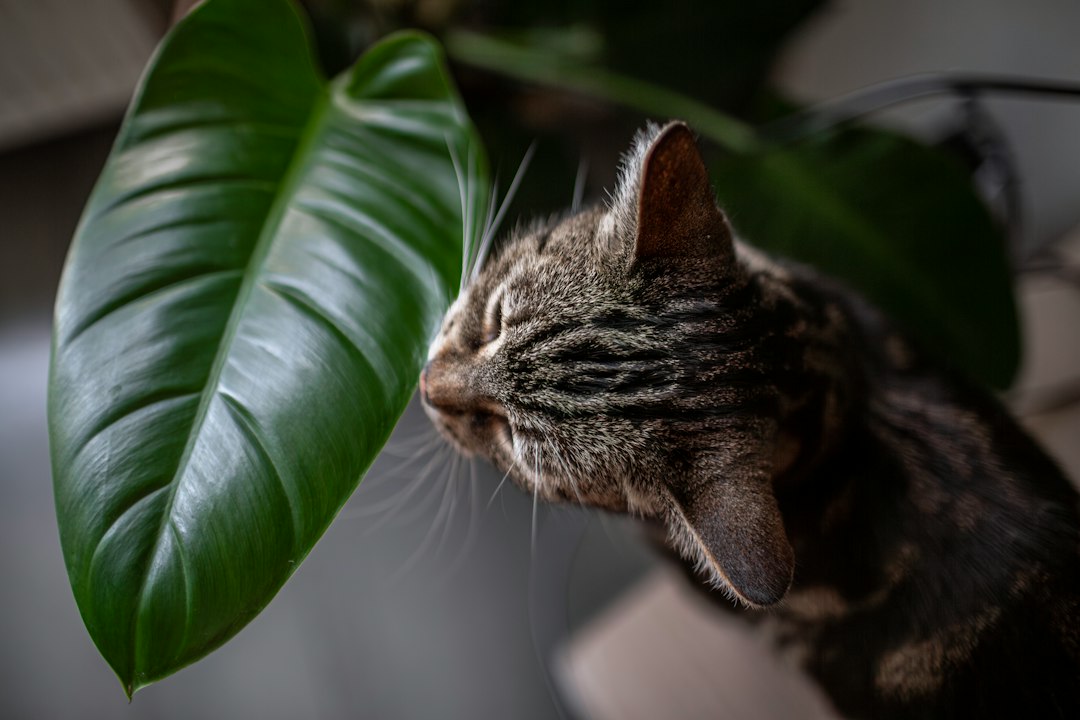
Of the 65 plant care guides on Wiltwatch, 32 cover plants the ASPCA lists as toxic to both cats and dogs, 23 cover plants it lists as non-toxic to both, and 10 have no matching ASPCA entry. None of the plants on the site is listed as toxic to only one of the two animals. Every row below was checked against the ASPCA Toxic and Non-Toxic Plants database between November 3 and November 6, 2026.
Each row links to the plant’s care guide on this site and to the ASPCA page it was checked against. The toxic principle and the signs are given in the ASPCA’s own wording, shortened where the original is long. Nothing on this page adds to what the ASPCA database says, and where the ASPCA has no entry for a plant, the row says so instead of guessing.
How to read this list
The ASPCA database is organised by plant species and common name, and it covers dogs, cats and horses. A few things are worth knowing before you use the tables:
- One entry, one species. Where a care guide covers a whole genus or group, the row uses the closest ASPCA entry, and the table names that entry. A note appears whenever the entry covers only part of what the guide covers, as with the cactus and ficus rows.
- “Toxic” describes a risk, not an outcome. The ASPCA lists the signs a plant can cause. For many common houseplants those signs are mouth irritation, drooling and vomiting, but the database does not say how much of a plant is a problem for a particular pet.
- “Not listed” does not mean safe. It only means the ASPCA database has no entry for that plant. Treat those plants with the same care as the toxic ones until you know more.
- Common names overlap. The ASPCA’s “Fiddle-Leaf” entry, for example, is a philodendron, not the fiddle leaf fig. Check the scientific name on the care guide before comparing it with another list.
Toxic to cats and dogs (32 plants)
The ASPCA lists every plant in this table as toxic to both cats and dogs. Many of them are aroids (pothos, philodendron, monstera, peace lily, dieffenbachia and others), which the ASPCA lists with calcium oxalates as the toxic principle.
| Plant | Cats | Dogs | Toxic principle (ASPCA) | Signs (ASPCA) | ASPCA entry |
|---|---|---|---|---|---|
| Alocasia | Toxic | Toxic | Insoluble calcium oxalates | Oral irritation, pain and swelling of mouth, tongue and lips, excessive drooling, vomiting (not horses), difficulty swallowing | Alocasia |
| Aloe vera | Toxic | Toxic | Saponins, anthraquinones | Vomiting (not horses), lethargy, diarrhea. The gel is considered edible. | Aloe |
| Amaryllis (Hippeastrum) | Toxic | Toxic | Lycorine and other alkaloids | Vomiting, salivation, diarrhea; large ingestions cause convulsions, low blood pressure, tremors and cardiac arrhythmias. Bulbs are the most poisonous part. | Barbados Lily |
| Anthurium | Toxic | Toxic | Insoluble calcium oxalates | Oral irritation, pain and swelling of mouth, tongue and lips, excessive drooling, vomiting (not horses), difficulty swallowing | Flamingo Flower |
| Arrowhead plant (Syngonium) | Toxic | Toxic | Insoluble calcium oxalates | Oral irritation, pain and swelling of mouth, tongue and lips, excessive drooling, vomiting (not horses), difficulty swallowing | Arrow-Head Vine |
| Asparagus fern | Toxic | Toxic | Not stated | Allergic dermatitis with repeated dermal exposure. Berry ingestion could result in gastric upset (vomiting, abdominal pain, or diarrhea). | Asparagus Fern |
| Begonia | Toxic | Toxic | Soluble calcium oxalates | Kidney failure (in grazing animals), vomiting, salivation in dogs/cats. Most toxic part is underground. | Begonia |
| Bird of paradise (Strelitzia) | Toxic | Toxic | GI irritants | Mild nausea, vomiting, drowsiness; caused mainly by fruit and seeds | Bird of Paradise Flower |
| Chinese evergreen (Aglaonema) | Toxic | Toxic | Insoluble calcium oxalates | Oral irritation, pain and swelling of mouth, tongue and lips, excessive drooling, vomiting (not horses), difficulty swallowing | Chinese Evergreen |
| Coleus (Coleus (Plectranthus)) | Toxic | Toxic | Essential Oils | Vomiting, diarrhea, depression, anorexia, occasionally bloody diarrhea or vomiting | Coleus |
| Cyclamen | Toxic | Toxic | Terpenoid saponins | Salivation, vomiting, diarrhea. Following large ingestions of tubers: heart rhythm abnormalities, seizures, death | Cyclamen |
| Dieffenbachia | Toxic | Toxic | Insoluble calcium oxalates, proteolytic enzyme | Oral irritation, intense burning and irritation of mouth, tongue and lips, excessive drooling, vomiting, difficulty swallowing | Dieffenbachia |
| Dracaena | Toxic | Toxic | Saponins | Vomiting (occasionally with blood), depression, anorexia, hypersalivation, dilated pupils (cats). | Dracaena |
| English ivy (Hedera) | Toxic | Toxic | Triterpenoid saponins (hederagenin) | Vomiting, abdominal pain, hypersalivation, diarrhea. Foliage is more toxic than berries | English Ivy |
| Ficus (weeping fig) | Toxic | Toxic | Proteolytic enzyme (ficin), psoralen (ficusin) | Gastrointestinal and dermal irritation | Fig |
| Gardenia | Toxic | Toxic | Genioposide, gardenoside | Mild vomiting and/or diarrhea, hives. | Gardenia |
| Geranium (Pelargonium) | Toxic | Toxic | Geraniol, linalool | Vomiting, anorexia, depression, dermatitis | Geranium |
| Jade plant (Crassula) | Toxic | Toxic | Unknown | Vomiting, depression, incoordination | Jade Plant |
| Kalanchoe | Toxic | Toxic | Bufodienolides | Vomiting, diarrhea, abnormal heart rhythm (rare). | Kalanchoe |
| Lavender (Lavandula) | Toxic | Toxic | Linalool, linalyl acetate | Nausea, vomiting (not in horses), inappetant | Lavender |
| Lucky bamboo (Dracaena) | Toxic | Toxic | Saponins | Vomiting (occasionally with blood), depression, anorexia, hypersalivation, dilated pupils (cats). | Dracaena |
| Monstera | Toxic | Toxic | Insoluble calcium oxalates | Oral irritation, intense burning and irritation of mouth, tongue and lips, excessive drooling, vomiting, difficulty swallowing | Swiss Cheese Plant |
| Oxalis (purple shamrock) | Toxic | Toxic | Soluble calcium oxalates | Kidney failure (rare in dogs/cats), tremors, salivation. | Shamrock Plant |
| Peace lily (Spathiphyllum) | Toxic | Toxic | Insoluble calcium oxalates | Oral irritation, intense burning and irritation of mouth, tongue and lips, excessive drooling, vomiting, difficulty swallowing. | Peace Lily |
| Philodendron | Toxic | Toxic | Insoluble calcium oxalates | Oral irritation, pain and swelling of mouth, tongue and lips, excessive drooling, vomiting (not horses), difficulty swallowing | Heartleaf Philodendron |
| Poinsettia (Euphorbia) | Toxic | Toxic | Irritant sap | Irritating to the mouth and stomach, sometimes causing vomiting, but generally over-rated in toxicity. | Poinsettia |
| Pothos (Epipremnum) | Toxic | Toxic | Insoluble calcium oxalates | Oral irritation, intense burning and irritation of mouth, tongue and lips, excessive drooling, vomiting, difficulty swallowing | Golden Pothos |
| Schefflera | Toxic | Toxic | Calcium oxalate crystals | Oral irritation, intense burning and irritation of the mouth, lips, tongue, excessive drooling, vomiting, difficulty in swallowing. | Schefflera |
| Snake plant (Sansevieria) | Toxic | Toxic | Saponins | Nausea, vomiting, diarrhea. | Snake Plant |
| Ti plant (Cordyline) | Toxic | Toxic | Saponins | Vomiting (occasionally with blood), depression, anorexia, hypersalivation, dilated pupils (cats) | Ti-Plant |
| Tradescantia | Toxic | Toxic | Not stated | Dermatitis | Inch Plant |
| Yucca | Toxic | Toxic | Saponins | Dogs, cats: Vomiting; Horses: liver disease, dermatitis | Yucca |
- Aloe vera: ASPCA adds that the gel is considered edible.
- Begonia: ASPCA notes that the most toxic part is underground.
- Bird of paradise: ASPCA notes that this plant should not be confused with Caesalpinia (Poinciana) gilliesii, which shares the common name.
- Ficus (weeping fig): The ASPCA entry is Ficus benjamina (weeping fig). ASPCA has no separate entry for the fiddle leaf fig (Ficus lyrata) or the rubber plant (Ficus elastica).
Toxic to only one of the two
None of the plants with a care guide on Wiltwatch is listed by the ASPCA as toxic to cats but not dogs, or to dogs but not cats. Each plant falls into one of the other three groups on this page.
Non-toxic to cats and dogs per the ASPCA (23 plants)
The ASPCA lists the plants in this table as non-toxic to both cats and dogs. Non-toxic does not mean a pet can eat any amount without an upset stomach, and two of the ASPCA pages below still print mild signs, which are noted.
| Plant | Cats | Dogs | ASPCA entry | Note |
|---|---|---|---|---|
| African violet (Saintpaulia) | Non-toxic | Non-toxic | African Violet | |
| Areca palm (Dypsis) | Non-toxic | Non-toxic | Areca Palm | |
| Boston fern (Nephrolepis) | Non-toxic | Non-toxic | Boston Fern | |
| Bromeliad (Guzmania, Neoregelia, Cryptanthus) | Non-toxic | Non-toxic | Orange Star | The ASPCA entry checked is Orange Star (Guzmania lingulata minor). |
| Cactus (Opuntia entry) | Non-toxic | Non-toxic | Tree Cactus | The ASPCA entry is Opuntia (tree cactus). ASPCA has no entry that covers every cactus. |
| Calathea | Non-toxic | Non-toxic | Calathea | |
| Christmas cactus (Schlumbergera) | Non-toxic | Non-toxic | Christmas Cactus | |
| Fittonia (nerve plant) | Non-toxic | Non-toxic | Nerve Plant | |
| Haworthia | Non-toxic | Non-toxic | Haworthia | |
| Hibiscus | Non-toxic | Non-toxic | Hibiscus | |
| Hoya | Non-toxic | Non-toxic | Wax Plant | The ASPCA entries checked are Wax Plant (Hoya carnosa) and Sweetheart Hoya (Hoya kerrii). |
| Jasmine (Jasminum) | Non-toxic | Non-toxic | Jasmine | |
| Money tree (Pachira) | Non-toxic | Non-toxic | Money Tree | Listed as non-toxic; the ASPCA page still prints these signs: nausea, vomiting and loose stool. |
| Orchid (Phalaenopsis) | Non-toxic | Non-toxic | Phalaenopsis Orchid | Applies to Phalaenopsis. Other orchid genera have separate ASPCA entries. |
| Parlor palm (Chamaedorea) | Non-toxic | Non-toxic | Parlor Palm | |
| Peperomia | Non-toxic | Non-toxic | Baby Rubber Plant | |
| Polka dot plant (Hypoestes) | Non-toxic | Non-toxic | Polka Dot Plant | Listed as non-toxic; the ASPCA page still prints mild signs: mild vomiting, diarrhea. |
| Ponytail palm (Beaucarnea) | Non-toxic | Non-toxic | Pony Tail | |
| Prayer plant (Maranta) | Non-toxic | Non-toxic | Prayer Plant | The ASPCA entry is filed as Prayer Plant (Calathea insignis), with Maranta given as a common name. |
| Rhipsalis | Non-toxic | Non-toxic | Mistletoe Cactus | The ASPCA entry is the species Rhipsalis cassutha (mistletoe cactus). |
| Rosemary (Rosmarinus (Salvia rosmarinus)) | Non-toxic | Non-toxic | Rosemary | |
| Spider plant (Chlorophytum) | Non-toxic | Non-toxic | Spider Plant | |
| Staghorn fern (Platycerium) | Non-toxic | Non-toxic | Common Staghorn Fern |
Not listed by the ASPCA (10 plants)
For these plants, no matching ASPCA entry was found. The note explains what the database does contain, so you can see why a related entry was not applied.
| Plant | What the ASPCA database shows |
|---|---|
| Air plant (Tillandsia) | No Tillandsia entry in the ASPCA database. |
| Bird’s nest fern (Asplenium nidus) | The ASPCA Asplenium entries are for a different species (mother fern, Asplenium bulbiferum), so they were not applied here. |
| Chinese money plant (Pilea peperomioides) | ASPCA lists several other Pilea species but not Pilea peperomioides. |
| Croton (Codiaeum) | No Codiaeum (croton) entry in the ASPCA database. |
| Ming aralia (Polyscias fruticosa) | No entry for Polyscias fruticosa. ASPCA lists a different species, geranium-leaf aralia (Polyscias guilfoylei), as toxic to dogs and cats. |
| Nepenthes (tropical pitcher plant) | No Nepenthes entry in the ASPCA database. |
| String of hearts (Ceropegia) | No Ceropegia entry in the ASPCA database. |
| String of pearls (Senecio (Curio) rowleyanus) | No entry for this species. The ASPCA Senecio entries are field plants such as ragwort and groundsel, so they were not applied here. |
| Succulents (mixed group) | No group-wide succulent entry. Individual entries vary: ASPCA lists hens and chickens (Echeveria elegans) and burro’s tail (Sedum morganianum) as non-toxic, while aloe and jade plant are listed as toxic (see their rows above). |
| ZZ plant (Zamioculcas) | No Zamioculcas entry in the ASPCA database. |
What to do if your pet eats a houseplant
The ASPCA’s advice is printed on its plant pages: if you suspect your pet may have ingested a potentially toxic substance, call ASPCA Poison Control at (888) 426-4435 or contact your local veterinarian as soon as possible. The ASPCA notes that a consultation fee may apply.
When you call, it helps to know exactly which plant was involved. The care guides linked above give each plant’s scientific name, and the ASPCA entry in the same row shows which listing the plant was checked against.
Keeping toxic plants and pets apart
If a plant from the toxic table shares a room with a cat or dog, the simplest step is to put it where the animal cannot reach or chew it, such as a hanging planter, a shelf the pet cannot get to, or a room the pet does not use. Fallen leaves and trimmings count too, so clear them up after pruning. If you are still choosing plants for a home with pets, the non-toxic table above is a starting point, and the houseplant care guides hub links every guide on the site.
How this page is kept up to date
This page is updated when new care guides are added to Wiltwatch: each new plant is checked against the ASPCA database and added to the matching table. The ASPCA list itself is the authority, so if an entry there changes, the ASPCA database takes precedence over this summary. Next reads: Why Are My Dieffenbachia Leaves Turning Yellow?, Why Is My English Ivy Dropping Leaves or Turning Brown? and Why Is My Rhipsalis Turning Brown or Shriveling?. See every guide in Houseplant Care Guides.